

Over the past year, the Korean market has been almost completely ignited by AI. The Korea Composite Stock Price Index (KOSPI) rose from 2,570 points in May 2025 to around 8,000 points in May 2026, gaining more than 200% and becoming one of the world’s strongest capital markets. At the same time, SK Hynix, South Korea’s semiconductor giant, saw employee bonuses soar to more than 100 million won, driven by surging demand for AI chips. From capital markets to the industrial supply chain and even everyday users, the whole of South Korea has been taking part in this AI wealth boom.
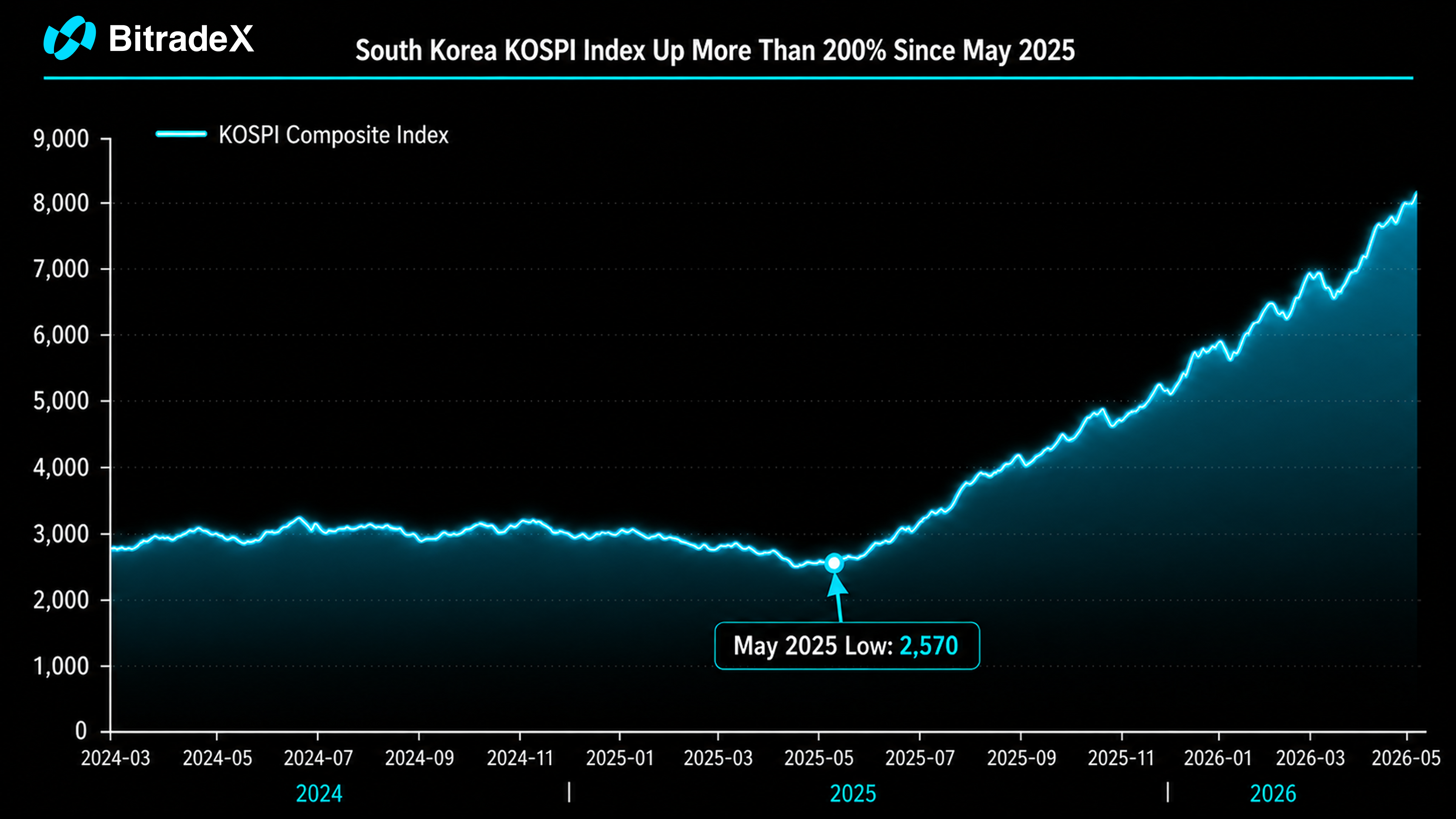
Behind all of this, what is truly driving the market frenzy may not be AI technology itself. More and more people are realizing that AI could be changing global capital flows, reshaping the allocation of industrial resources, and forming the next global wealth structure. Looking at history over a longer cycle, almost every technological revolution that changed the world redefined wealth. During the First Industrial Revolution, the steam engine boosted productivity and enabled countries with industrialization capabilities to rise rapidly. During the Second Industrial Revolution, electricity, oil, and manufacturing became the core of wealth. During the Third Technological Revolution, the internet reshaped the global landscape of capital and tech giants once again.
What is happening now may be a fourth productivity revolution centered on AI. But unlike previous revolutions, the steam engine solved the problem of “physical power,” electricity improved “industrial efficiency,” and the internet transformed “information connectivity.” In a sense, the first three revolutions mainly extended humanity’s “limbs” and “senses.” AI is different. For the first time, AI is truly entering the realms of analysis, judgment, learning, and decision-making, and is even partially replacing human cognitive labor. In other words, AI is beginning to simulate the human “brain.” This is the most fundamental difference between AI and all previous technological revolutions.
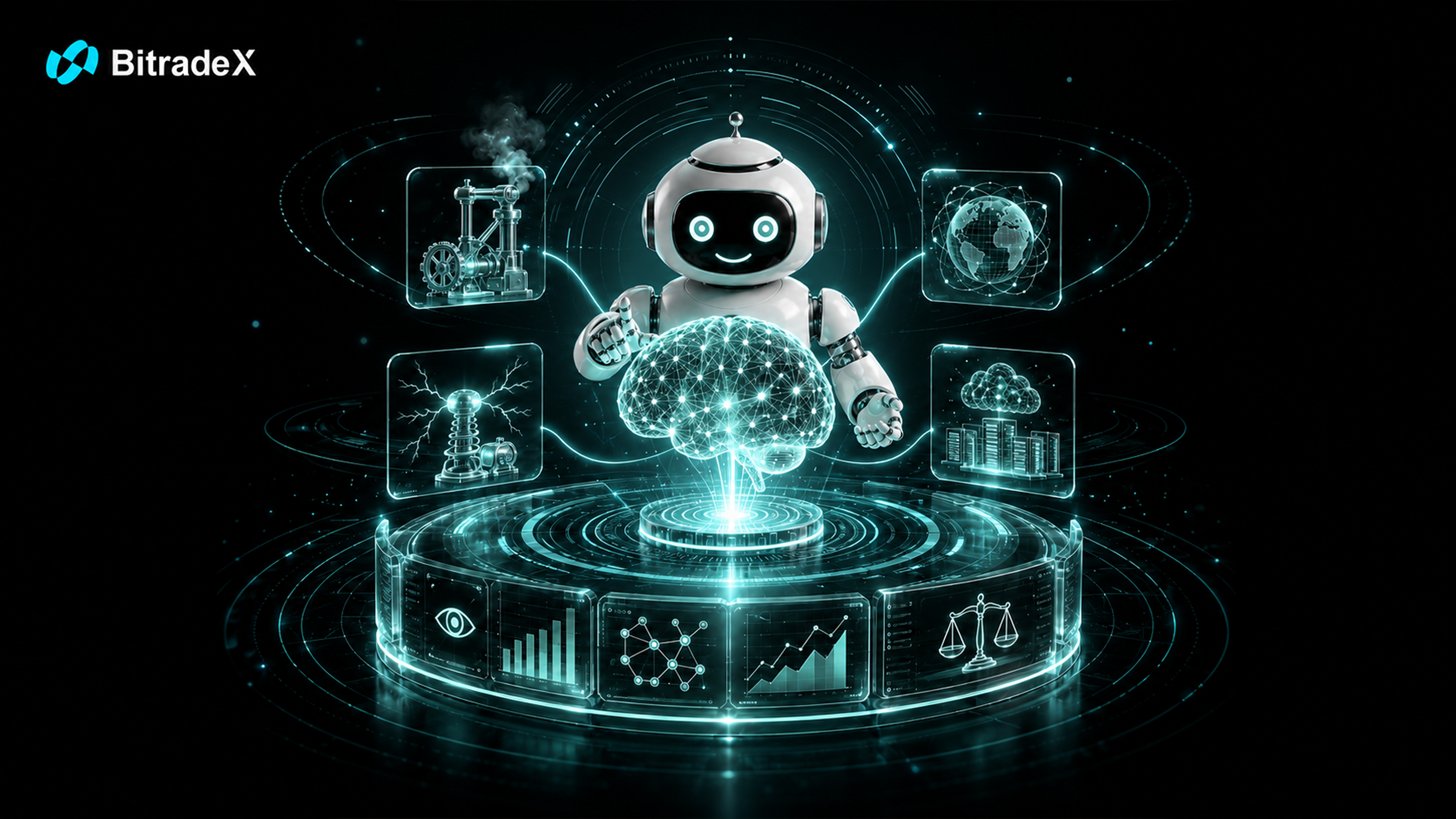
That means AI is affecting not just one industry, but finance, manufacturing, healthcare, education, content, trading, and even the way society as a whole operates. For this reason, global capital, industrial resources, and top talent are all pouring into AI. More and more people believe that the wealth effect of AI will far exceed that of previous technological revolutions.
Among all the possible application scenarios for AI, Crypto may be one of the first to change. This is an industry built almost entirely on data, liquidity, and real-time feedback. On-chain fund flows, shifts in market sentiment, and global trading behavior are changing almost constantly. Compared with many traditional industries, Crypto moves faster and depends more heavily on immediate judgment and continuous decision-making.
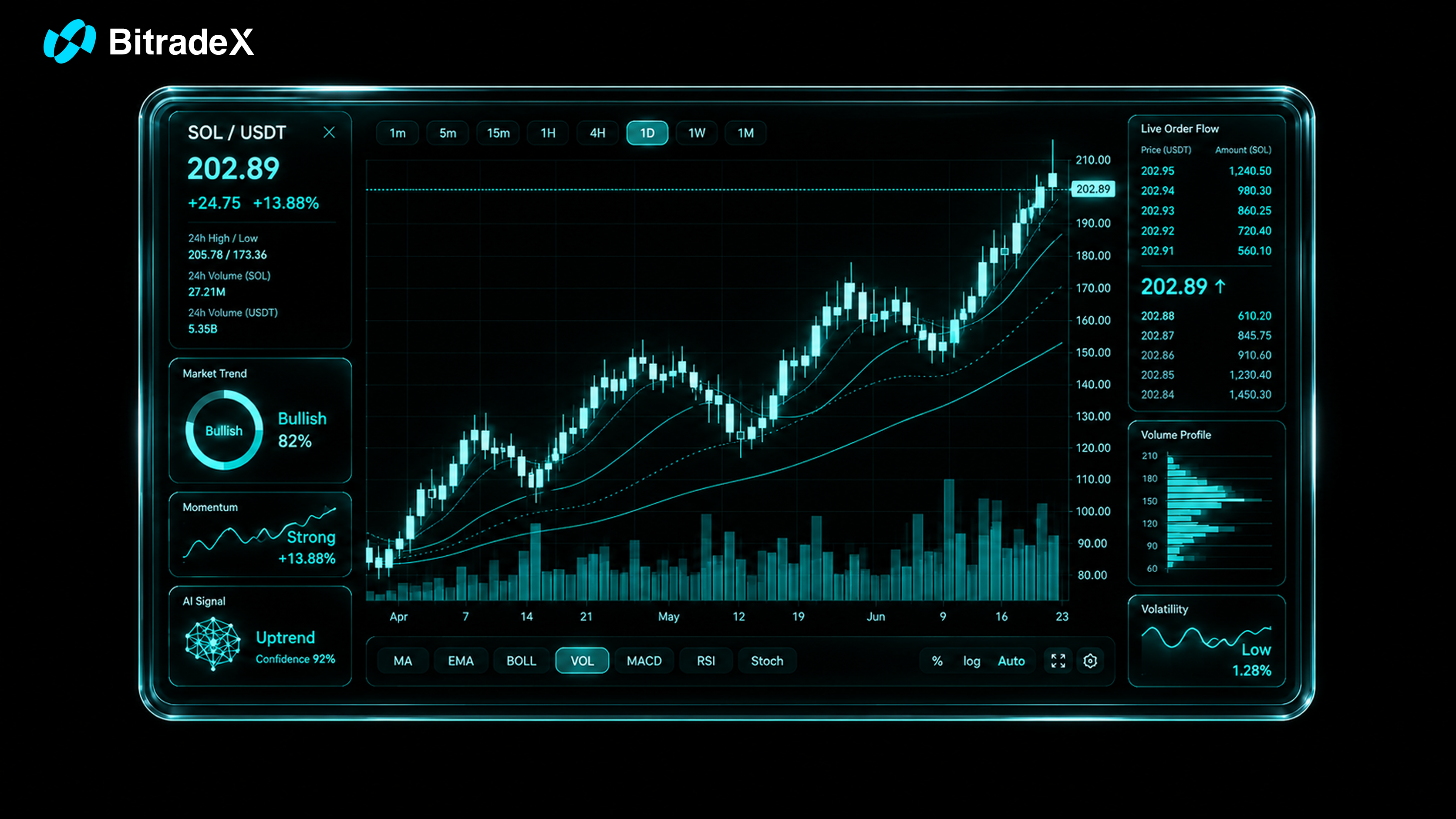
Within the entire Crypto ecosystem, trading is the most central and the closest thing to “real-time decision-making.” Trading, in essence, is about processing information, identifying trends, managing risk, and continuously making judgments. Especially in a market that never stops running 24/7, people constantly face volatility, emotions, and market changes, which makes trading a highly decision-intensive activity by nature. In a sense, this is exactly where AI can create the most value.
The problem is that human rationality is limited, and it is difficult to remain stable for long in a highly volatile market. In Crypto trading in particular, emotions such as greed, fear, FOMO, and overtrading affect user judgment almost every day. Many times, what really affects trading outcomes is not the information itself, but the decision bias created by emotional swings.
This is actually a question BitradeX has been rethinking for a long time: in a market with high volatility and high information density, can a more systematic approach help users reduce emotional interference and improve the stability of trading decisions? Compared with many quantitative products that are still stuck in the “automation tool” stage, BitradeX hopes that AiBot can genuinely lower the trading barrier for everyday users. What it aims to solve is not just “how to improve trading efficiency,” but the most real problems users face in trading: not understanding the market, not being able to hold positions, lacking the time to watch the market, and struggling to execute a strategy consistently over the long term.
In simple terms, the core logic of AiBot is to minimize the interference of emotions in trading decisions as much as possible. Tasks that used to rely heavily on experience, such as market trend identification, anomaly monitoring, position and risk control, and strategy adjustment, are gradually becoming more systematic. Users no longer need to stare at charts for long periods or make trading decisions while caught up in emotion. When market rhythm changes, AiBot keeps tracking market conditions and tries to dynamically adjust its strategy logic. Compared with emotional “chasing pumps and dumping bottoms” behavior, it emphasizes stability, discipline, and long-term logic. This is also one of the biggest differences between AiBot and traditional quantitative tools.
From a broader perspective, AiBot is only one part of the broader BitradeX ecosystem. Whether it is trading, AI Quant, payments, or Labs incubation, BitradeX is working to connect different businesses into a more complete Crypto ecosystem. AiBot is more like one of the true entry points for everyday users. Because future competition may no longer be about who gets information faster, but about who can understand the market and adapt to it more efficiently. And the integration of AI and Crypto may only just be starting to enter real-world use cases.
、

所有评论