

In 2025, Bitcoin briefly surpassed $120,000. Based on fully diluted valuation (FDV), its market capitalization exceeded $2.5 trillion, surpassing global tech giants such as Google. This was one of the most symbolic moments since the birth of the digital asset industry. An asset class that emerged just over a decade ago has grown into one of the world’s most important financial asset categories. In terms of market capitalization, user base, and capital attention, the digital asset industry has undoubtedly achieved remarkable success.
But as the industry continues to set new market cap records, one question becomes increasingly worth asking: if digital assets have become so successful, why have they still not truly entered the real world? Over the past decade and more, the most prosperous use case in the digital asset industry has remained trading. Buy, hold, sell. Then enter the next round of trading. The industry’s growth logic has long revolved around asset prices and market liquidity. Yet beyond trading, the real-world economic activities that digital assets can participate in remain extremely limited.
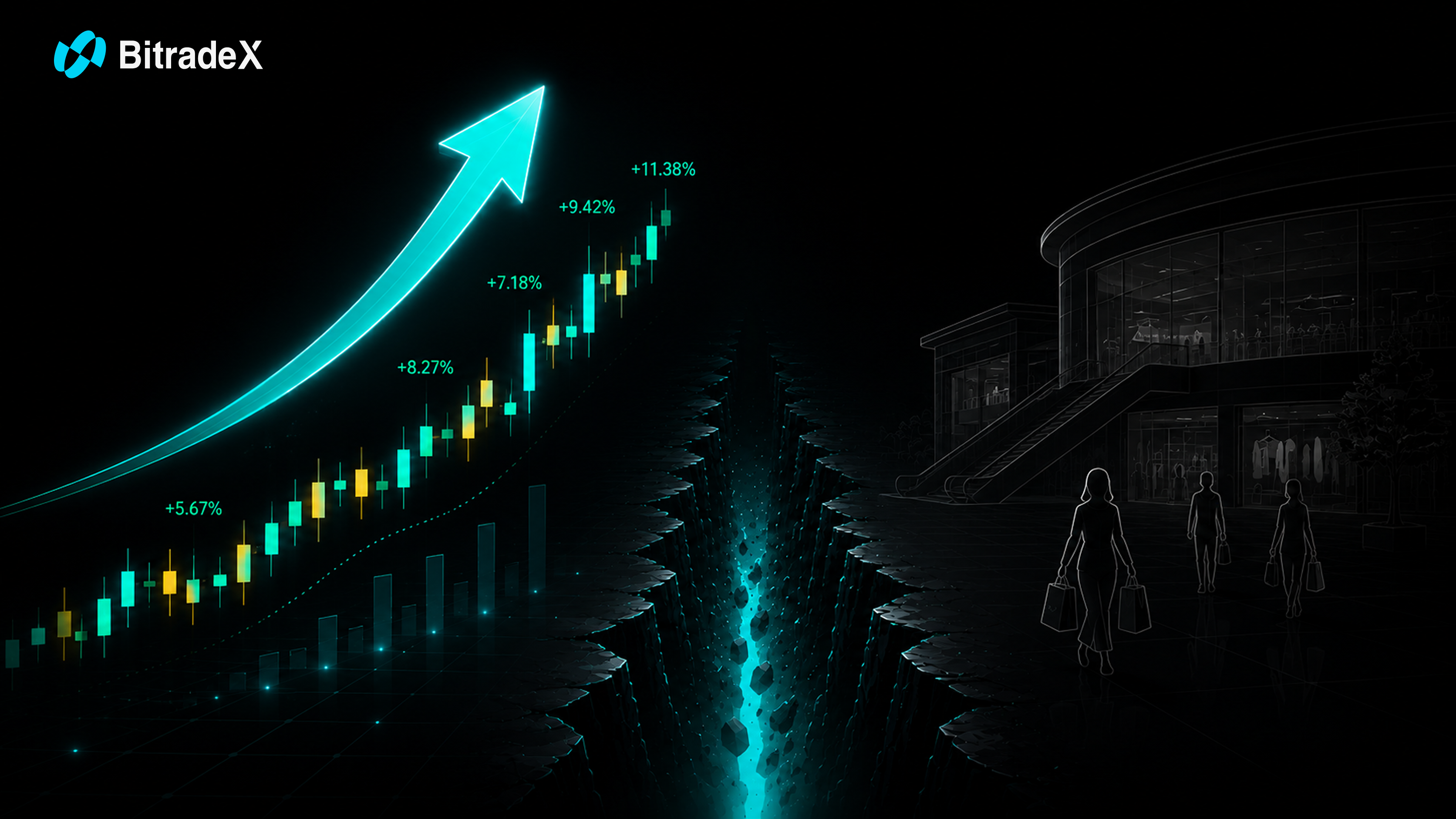
For most ordinary people, digital assets still mainly remain at the investment and trading level. They have created huge market value, but have not simultaneously established sufficiently broad social utility. This has led to a long-standing contradiction in the industry: the sector keeps getting larger, but its breakout effect remains limited. Digital assets have attracted global capital, yet they have not truly entered everyday life; they have generated massive wealth effects, yet they have not been widely integrated into the real commercial system. This means that while digital assets have achieved value storage, they have not yet truly achieved value circulation.
If value can only circulate within trading markets and cannot enter the real economy, then no matter how large the market becomes, it is still essentially value spinning within the digital world. In a sense, what the entire digital asset industry truly lacks may be the final piece of the puzzle: value circulation.
By now, the digital asset industry does not lack assets or users. What it truly lacks is the ability to take value beyond the trading market. Over the past decade and more, the industry has continuously created new asset categories. From BTC to ETH. From DeFi to NFT. From Meme to RWA. In nearly every cycle, new market hotspots emerge. But most of these innovations still revolve around the assets themselves.
For the industry, however, a more important question has never been fully solved: how can digital assets truly participate in real economic activity? Because any asset can only form a sustainable value loop if it is used continuously. If an asset can only grow through trading, then the larger the market becomes, the stronger its dependence on liquidity becomes.
And once the market enters a downturn, growth momentum tends to weaken. This is also why, in recent years, more and more practitioners have shifted their focus from trading markets to payment markets. Because people are gradually realizing that the next stage of digital asset growth may not come from more people trading. It may come from more people using.
The industry has recognized the problem. But for a long time, the market lacked a truly viable solution. Most digital assets are highly volatile. An asset received today may be worth significantly more or less tomorrow. This naturally makes them better suited as investment assets rather than payment instruments.
The emergence of stablecoins changed this situation for the first time. They retain the advantages of blockchain networks—global reach, 24/7 operation, and highly efficient settlement—while significantly reducing the barrier to use by anchoring to fiat currencies. This means digital assets have, for the first time, acquired the basic conditions to enter the real economy. If Bitcoin solves value storage, then stablecoins solve value circulation.
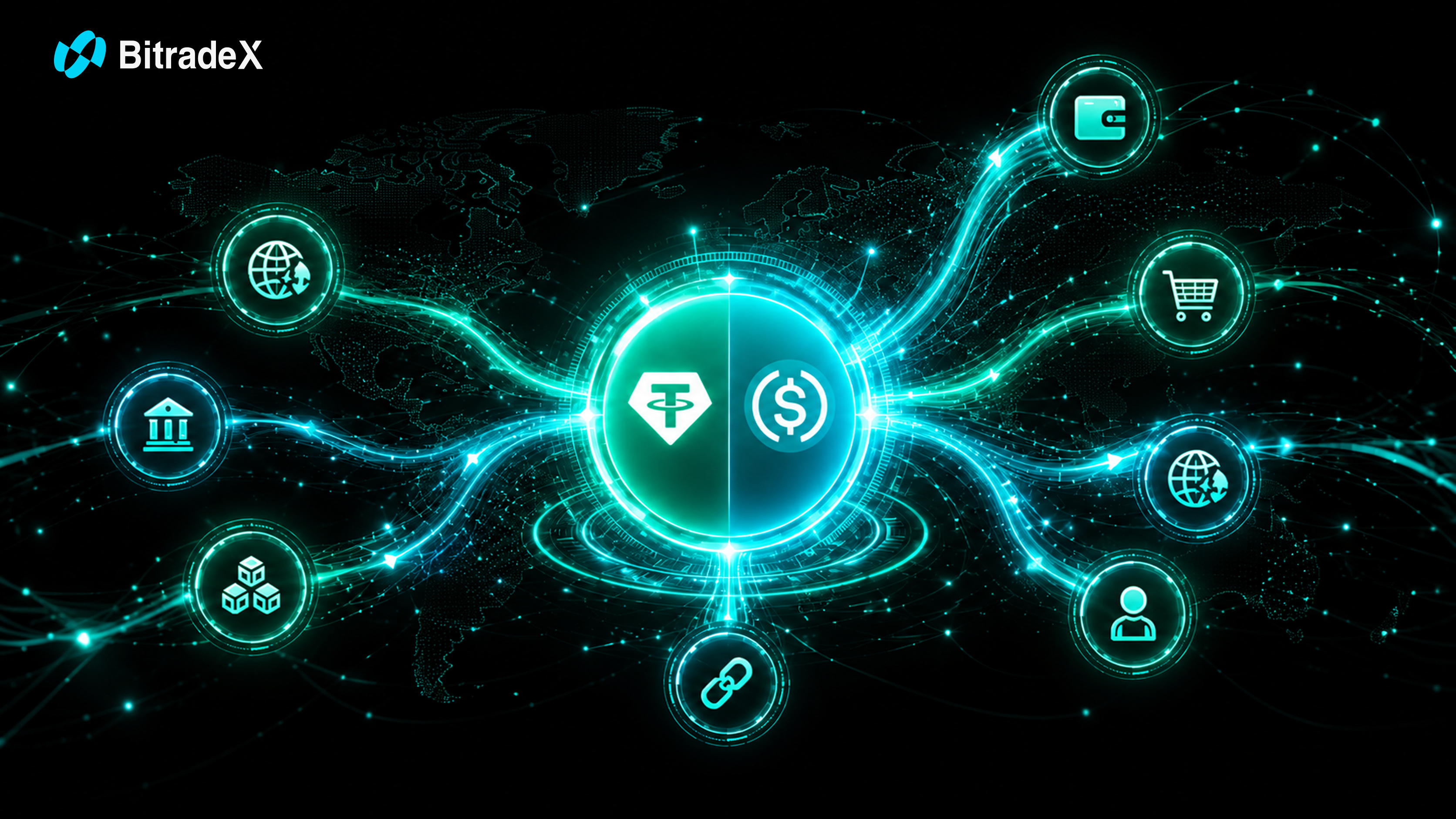
For the industry, this is not merely a new asset form. It also means digital assets finally have a bridge from the trading market to the real world. As a result, more and more traditional financial institutions, internet companies, and global payment platforms are accelerating their stablecoin strategies. What they see is not just stablecoins themselves, but the global value circulation network they represent.
When value can move across borders at low cost and high efficiency, the growth logic of digital assets also begins to change. In the past, the industry competed on trading volume. In the future, it may compete on payment capability. Trading solves the buying and selling problem. Payment solves the usage problem. When digital assets can participate in consumption, cross-border payments, commercial settlement, and international trade, the market they address will far exceed the trading market itself.
Against this backdrop, BitradeX has been continuously advancing its global payment ecosystem in recent years. Because we have always believed that the future of digital assets is not only about being held. More importantly, it is about being used. From trading ecosystem to AI products, and then to payment infrastructure, BitradeX is steadily building an ecosystem that covers the full lifecycle of digital assets.
Among these efforts, BTX Card is a key entry point connecting digital assets with real-world consumption. For many users, digital assets remain trapped in their accounts for a long time. They can be invested in, traded, but are difficult to use in real life. BTX Card aims to solve precisely the last-mile problem between digital assets and everyday spending.
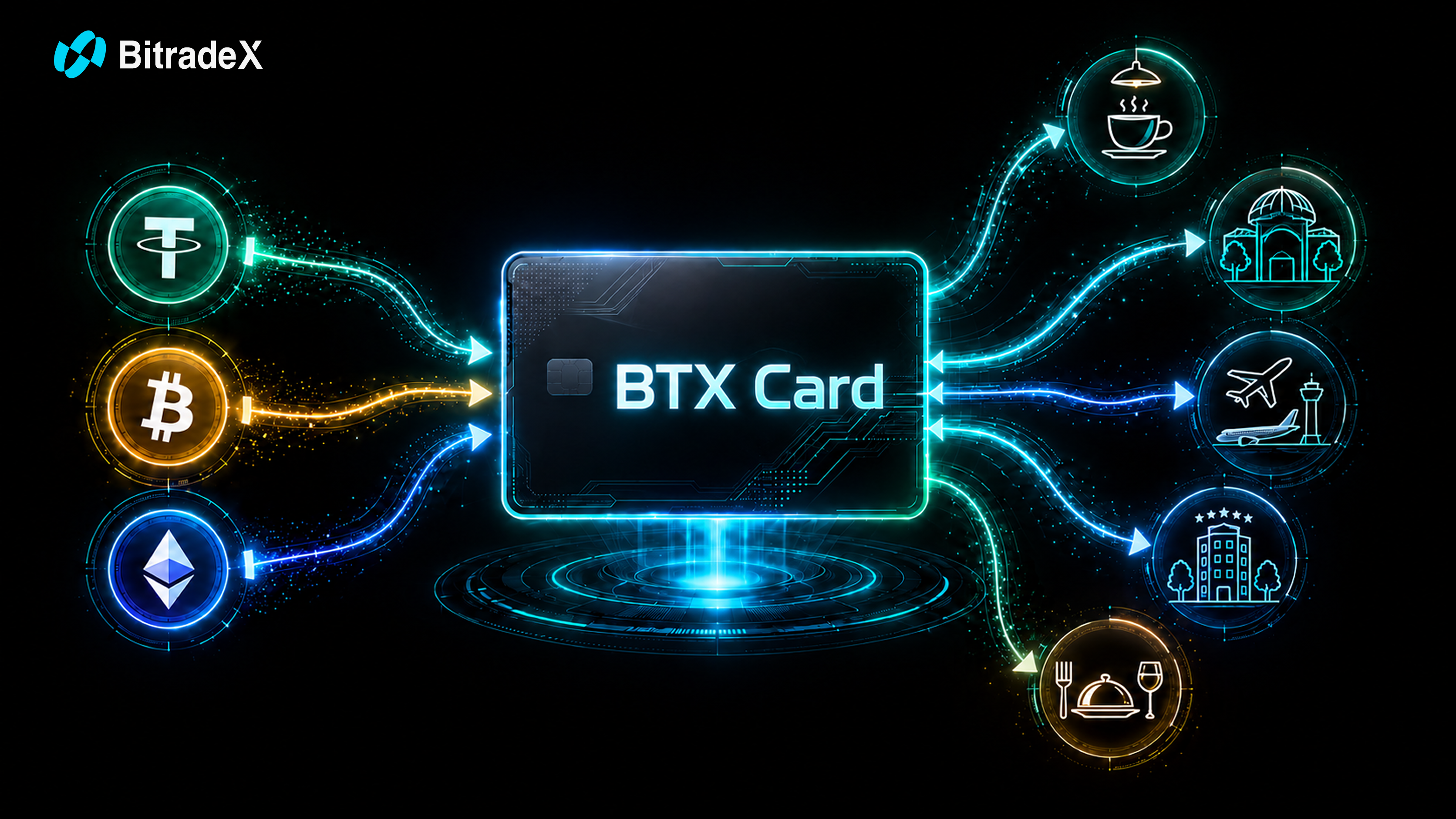
When digital assets can be used for payments, consumption, and more business scenarios, the value they create will no longer be limited to trading markets, but will truly enter the real economy. This is an important step for digital assets to move from value storage to value circulation. At the same time, BitradeX is also accelerating its global expansion.
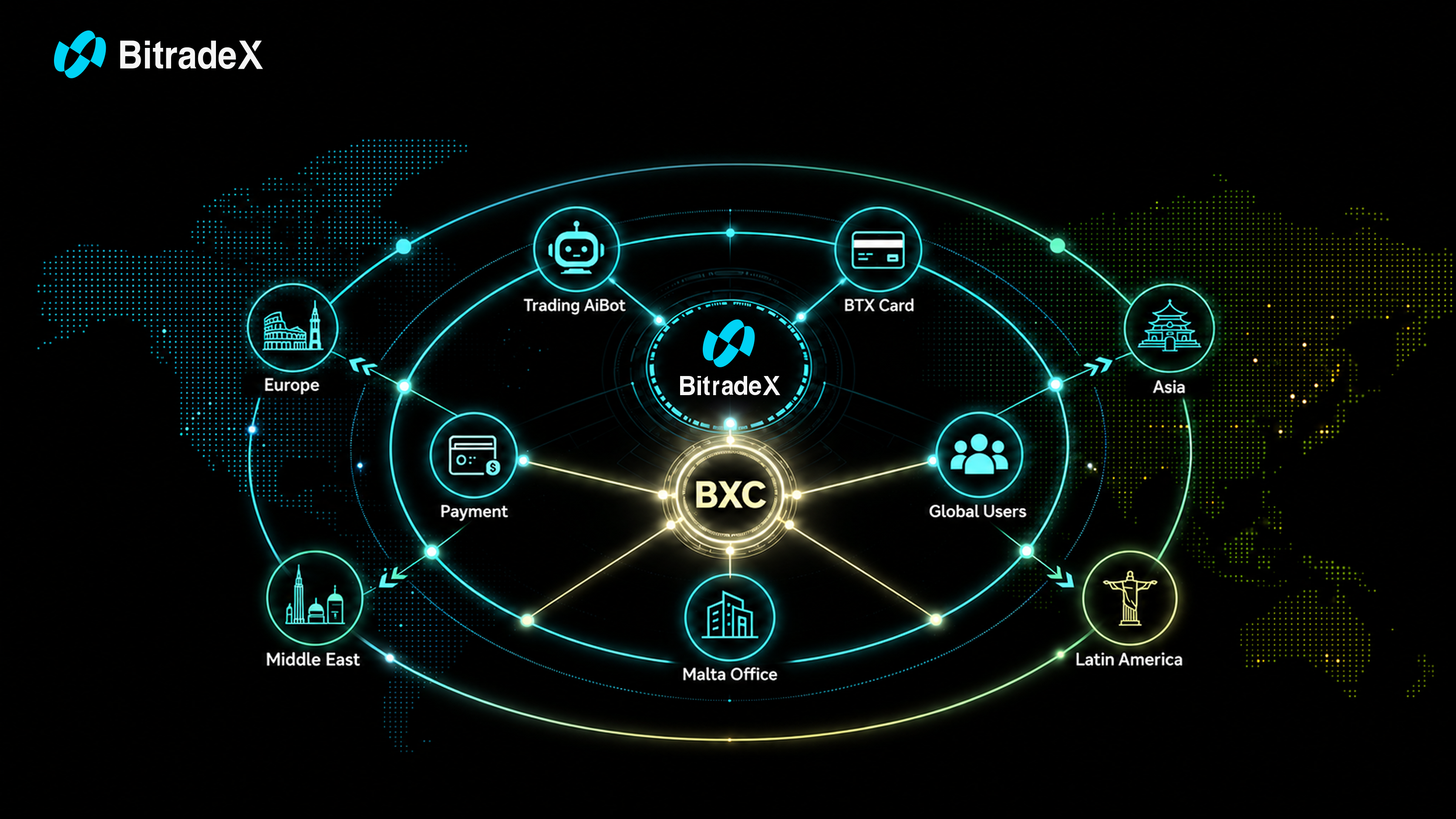
In 2026, BitradeX’s new Malta office was officially launched. As one of Europe’s important digital asset industry hubs, Malta will play a key role in connecting the European market with global operations in the future. For BitradeX, the Malta office is not just a workplace. It is a strategic anchor point in the future global payment ecosystem. Because what truly matters in the future is not just connecting more users, but connecting more countries, more markets, and more value-flow scenarios.
Any ecosystem needs a value carrier to develop. For BitradeX, BXC is playing exactly that role. As the trading ecosystem, AI products, payment business, and global market expansion continue to advance, the value created by the platform ecosystem will continue to accumulate across the entire ecosystem.
The value of BXC does not come from a single function. It comes from the speed and scale of the entire ecosystem’s development. User growth. Trading ecosystem expansion. Payment business rollout. Global market expansion. These factors together form the important foundation of BXC’s long-term value.
Looking back at the development of the digital asset industry: Bitcoin solved the problem of value storage. Smart contracts drove value creation. Stablecoins, meanwhile, are now driving value circulation. If trading gave birth to the digital asset industry, then payments may very well determine how far this industry can ultimately go.
For BitradeX, BTX Card, the global payment network, the Malta international expansion, and the BXC ecosystem are not separate businesses. They all point in the same direction: transforming digital assets from investment products into globally usable assets. And this transformation may only just be beginning.

所有评论