

Summary: Recent security incidents across the industry have once again demonstrated that asset protection extends beyond wallets to include system permissions and operational processes. In response, NodeXX continues to strengthen its risk controls by incorporating tiered access permissions, reviews of critical operations, and security audits into its day-to-day governance, creating a more resilient foundation for business growth.
If an asset transfer carries a valid signature, does that necessarily mean it was properly authorized?
A recent security incident involving a major cryptocurrency trading platform has brought this question into focus. Initial disclosures indicated that an operations device had been compromised, while subsequent investigations identified additional points of intrusion. At the same time, official updates stated that no evidence of private key exposure had been found at that stage.
The full cause remains subject to further investigation. However, the information available already highlights an important point: asset security cannot be evaluated solely by whether private keys have been stolen.
Preliminary on-chain analysis by TRM Labs found that abnormal transfers across multiple networks carried valid signatures, suggesting that hot-wallet signing infrastructure may have been affected. This shifts attention to the operational chain behind the wallet: which systems can initiate a request, how that request is approved, and who ultimately executes it.
A simplified example illustrates the distinction. Even if an official seal remains locked securely in a safe, the approval process is still compromised if someone can submit a fraudulent request and persuade its custodian to authorize the wrong instruction. The seal never leaves the safe, but the transaction is still illegitimate.
The same principle applies to digital asset platforms. Wallets may perform the final transaction, but every step before a request reaches the wallet can influence where assets ultimately go.
As its business continues to grow, NodeXX is strengthening its risk management framework by incorporating asset security and orderly platform operations into its daily governance.
The platform integrates identity verification, fund monitoring, and trading behavior management into its risk controls. These measures are supported by tiered internal permissions and reviews of critical operations, with appropriate safeguards applied across different areas of the business to provide users with a safer and fairer trading environment.
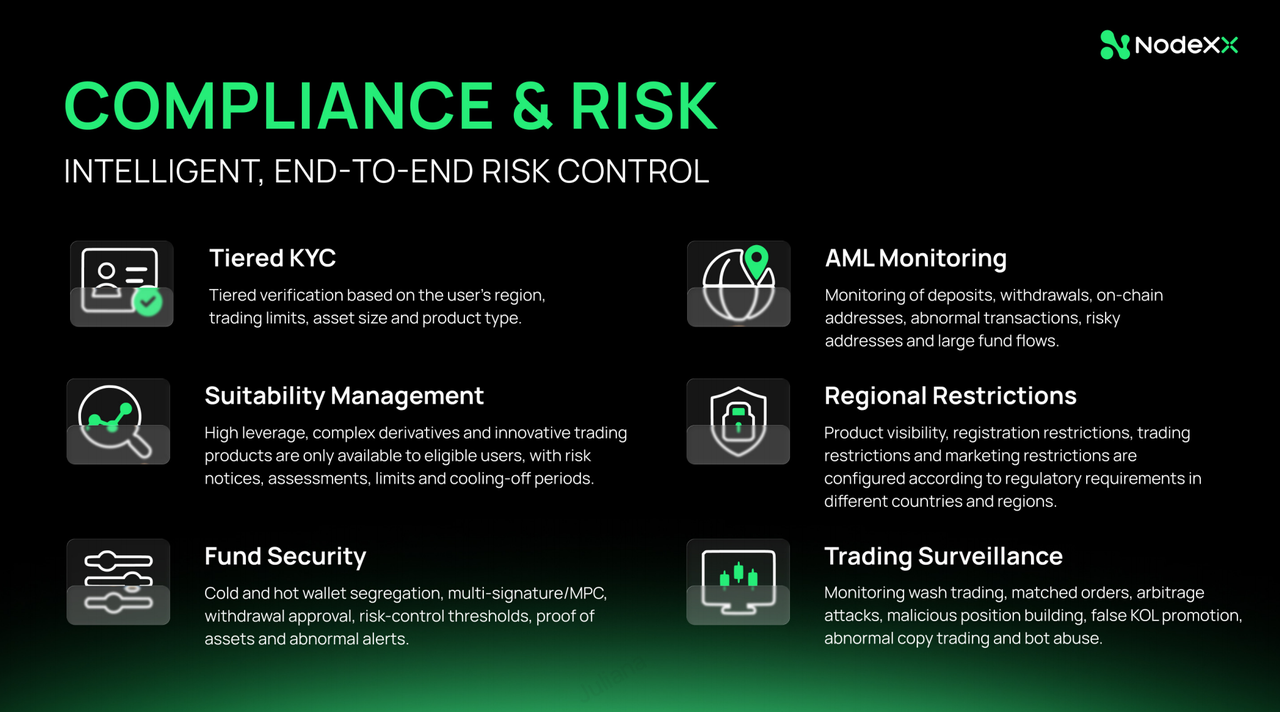
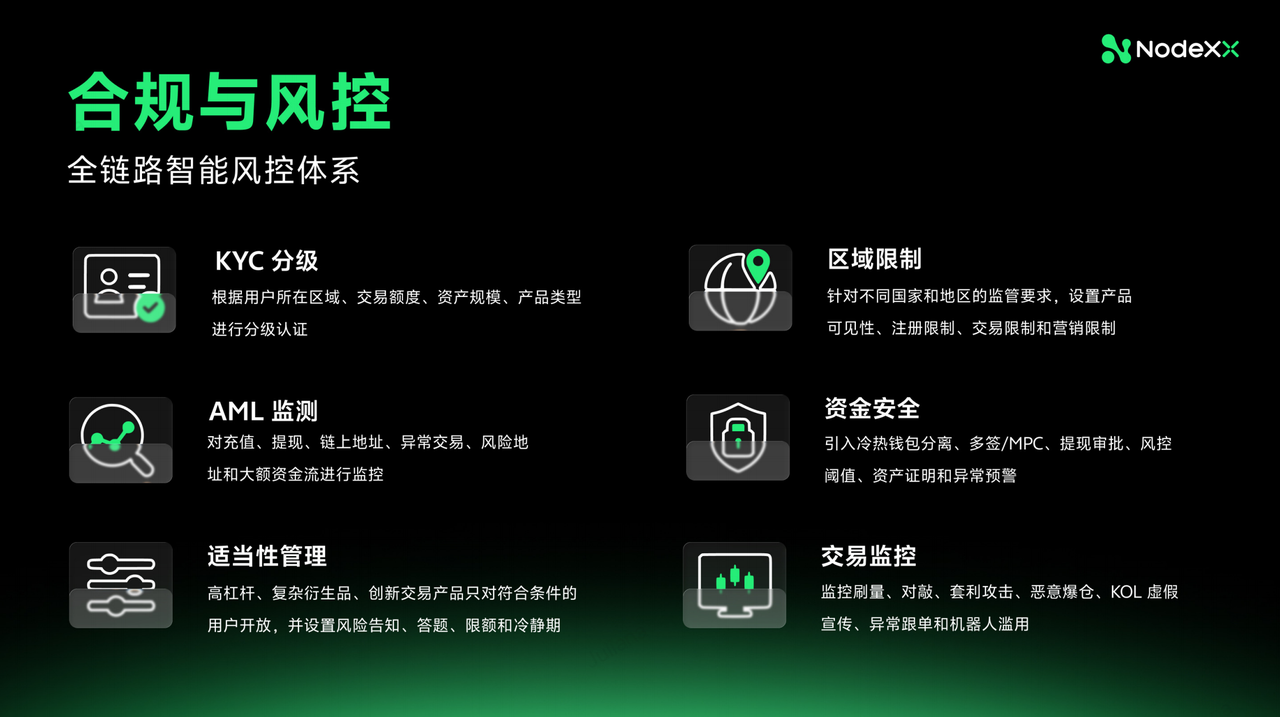
At the account and product-access level, NodeXX applies tiered identity verification based on factors including the user’s region, trading limits, asset holdings, and product type. In accordance with the regulatory requirements of each market, the platform may also apply restrictions to product visibility, registration, trading, and marketing.
For high-leverage products and complex derivatives, NodeXX uses suitability controls, eligibility requirements, and risk disclosures to ensure that product access aligns with the user’s circumstances.
Once funds enter the platform, anti-money laundering monitoring covers deposits, withdrawals, and associated on-chain addresses. Risky addresses, unusual transactions, and large fund movements are subject to ongoing monitoring.
For asset custody and withdrawals, NodeXX combines hot and cold wallet segregation, multisignature and multiparty computation (MPC), withdrawal reviews, risk thresholds, and abnormal-activity alerts. These controls address asset storage, operational authorization, and fund transfers at different levels, reducing the likelihood that a single point of failure will escalate into a wider incident.
NodeXX has also recently strengthened its oversight of account activity and trading integrity. Potentially abusive conduct—including volume manipulation, wash trading, and the misuse of automated tools—is reviewed using monitoring data, with appropriate action taken under platform rules.
When abnormal behavior may disrupt platform operations or harm other users, timely investigation and enforcement form part of the platform’s governance responsibilities. NodeXX will continue reviewing permission settings and operational procedures while improving its response to unusual activity, helping protect user assets and maintain a fair, orderly trading environment.
Establishing policies is only the beginning. Platforms must also verify that those policies remain effective as the business evolves.
Launching new products, modifying systems, or introducing new partners can change existing operational relationships. A permission that was once necessary may no longer be appropriate after responsibilities or business requirements change. Likewise, an approved process must be reviewed continuously throughout its operation.
NodeXX incorporates security audits into its governance framework to evaluate both the design of its controls and how they are implemented in practice. Audits connect policy requirements with real operational activity, helping identify issues and bring them into a structured improvement process.
Emergency drills focus on coordination when abnormal situations occur. If a funding service were to experience an unexpected issue, for example, the technical team would need to determine the scope of the impact, business and customer service teams would need to coordinate communications, and the relevant decision-makers would need to determine the appropriate response.
Drills help test whether these responsibilities and handoffs are clearly understood, ensuring that response plans function in practice rather than existing only on paper.
The response to the recent industry incident also demonstrates the importance of speed and external coordination. Elliptic’s tracking analysis documented both the freezing of certain assets and the attacker’s continued conversion and transfer of funds. Identifying where assets are moving and successfully containing them are two different challenges.
For NodeXX, ongoing audits and drills create a stronger link between routine security reviews and incident response. This gives its risk controls a more complete operational foundation and allows them to evolve alongside the business.
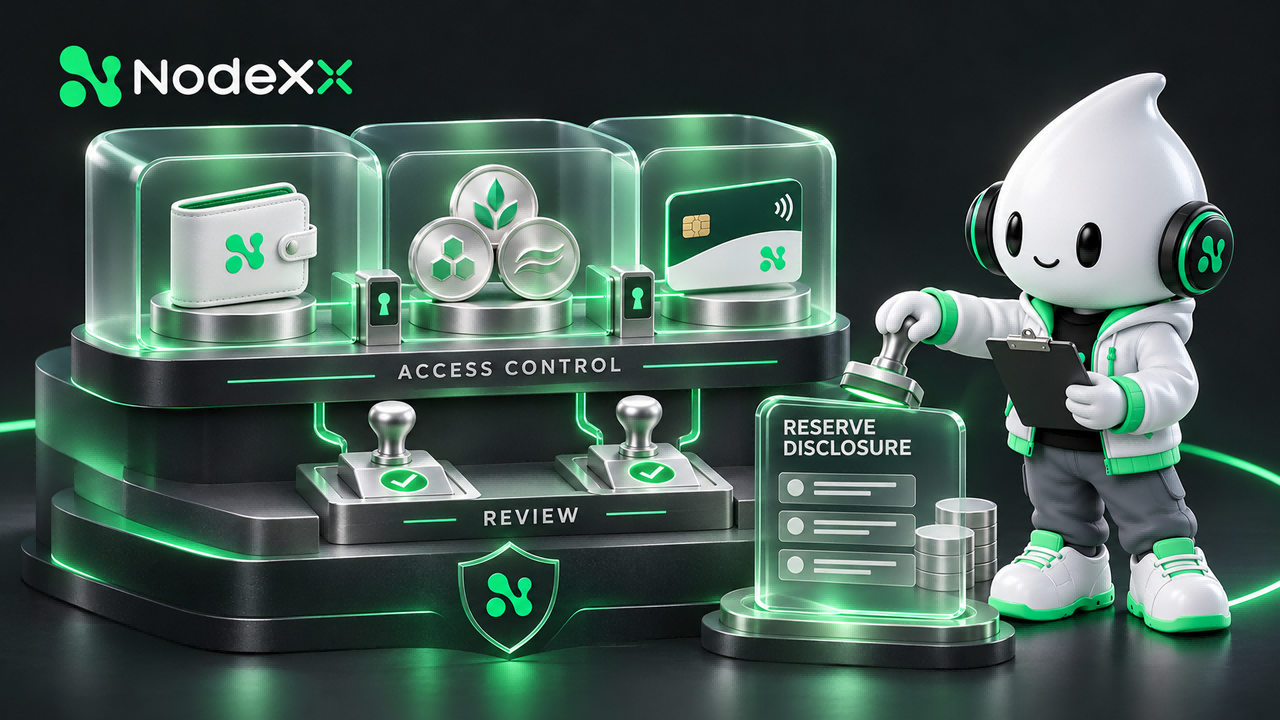
NodeXX is expanding into wallet, multi-asset, and payment-related services. These developments will create more use cases while increasing coordination between systems and external partners.
Users may experience these services through an increasingly unified interface, but the systems behind that interface must maintain clear distinctions between the permissions and responsibilities of each service. Defining the scope of authorization granted to one service—and keeping it appropriately separated from others—remains an essential governance priority as the product ecosystem grows.
NodeXX’s existing framework of tiered permissions, operational reviews, and fund risk controls provides a foundation for this work. As new services develop, the platform will continue strengthening its governance and controls so that security capabilities advance alongside its products.
Asset disclosure serves a separate but complementary purpose. NodeXX regularly publishes Proof of Reserves information, giving users a way to review the platform’s asset position.
Proof of Reserves and internal controls address different questions. The former shows whether platform reserves cover user assets; the latter concerns how those assets are managed and used. Together, they create a more complete framework of platform accountability.
The long-term value of security therefore also depends on how effectively a platform manages its own complexity. As the scope of the business expands, clear rules and sustainable review mechanisms become increasingly important, ensuring that each new service is supported by an appropriate governance foundation.
Security incidents may become visible in an instant, but strong protection is built through consistent daily work. Permission reviews, secondary checks on critical operations, and revisions made after emergency drills are all practical components of platform governance.
Since its establishment, NodeXX has continued strengthening its risk controls, improving internal management, and advancing compliance in line with the regulatory requirements of different markets. Through ongoing implementation and improvement, the platform aims to embed security responsibilities throughout its operations and provide users with a more resilient foundation for accessing global markets.
Connecting global assets with opportunities for value creation requires a platform to assume responsibilities proportionate to the scope of its services. For NodeXX, deeper governance and stronger risk controls are essential investments in sustainable global growth—and a critical foundation for earning lasting user trust.
Founded in July 2024, NodeXX is a next-generation multi-asset platform built for global users. With digital asset trading at its core, NodeXX connects diverse markets including Hong Kong stocks, U.S. stocks, gold, forex, and indices. The platform provides integrated services across spot trading, futures trading, earn, wallets, and innovative financial solutions, aiming to become an intelligent node that connects global assets and value opportunities.
Powered by fast, reliable, and intelligent infrastructure, NodeXX combines AI and social trading capabilities to help users discover market opportunities, understand market dynamics, and access a more efficient asset experience.
For more information, please visit: Official Website | Twitter | Telegram

所有评论