
On July 13, the escalation of the US-Iran conflict quickly triggered global market volatility. International crude oil futures surged over 9% in a single day, marking the largest gain since 2020. Meanwhile, gold remained under pressure, showing a clear divergence from traditional safe-haven logic.
The same international event drove crude oil and gold into completely opposite directions. This demonstrates that market reactions do not simply follow the news; instead, they re-evaluate the future based on events. Capital never focuses on the news itself, but on how the future will evolve after an event occurs. Price is merely the result, while the event is the cause. From geopolitical conflicts and tariff policies to interest rate decisions and economic data, every major event reshapes market expectations and continuously influences capital flows. As more and more prices become event-driven, the focus of investors is quietly shifting.
From Trading Assets to Trading Events
In the past, investors focused more on assets. If gold went up, they bought gold; if crude oil fell, they traded crude oil; if an index grew stronger, they allocated funds to index products. The object of trading always revolved around the asset itself.
However, as global markets become increasingly interconnected, people have come to realize that what truly drives asset price changes is not the asset itself, but the events that constantly unfold. A central bank interest rate hike can impact global stock markets; a non-farm payrolls (NFP) report can alter the trajectory of the US dollar; a tariff policy can reprice global supply chains; and a geopolitical conflict can simultaneously impact gold, crude oil, foreign exchange, and even digital assets.
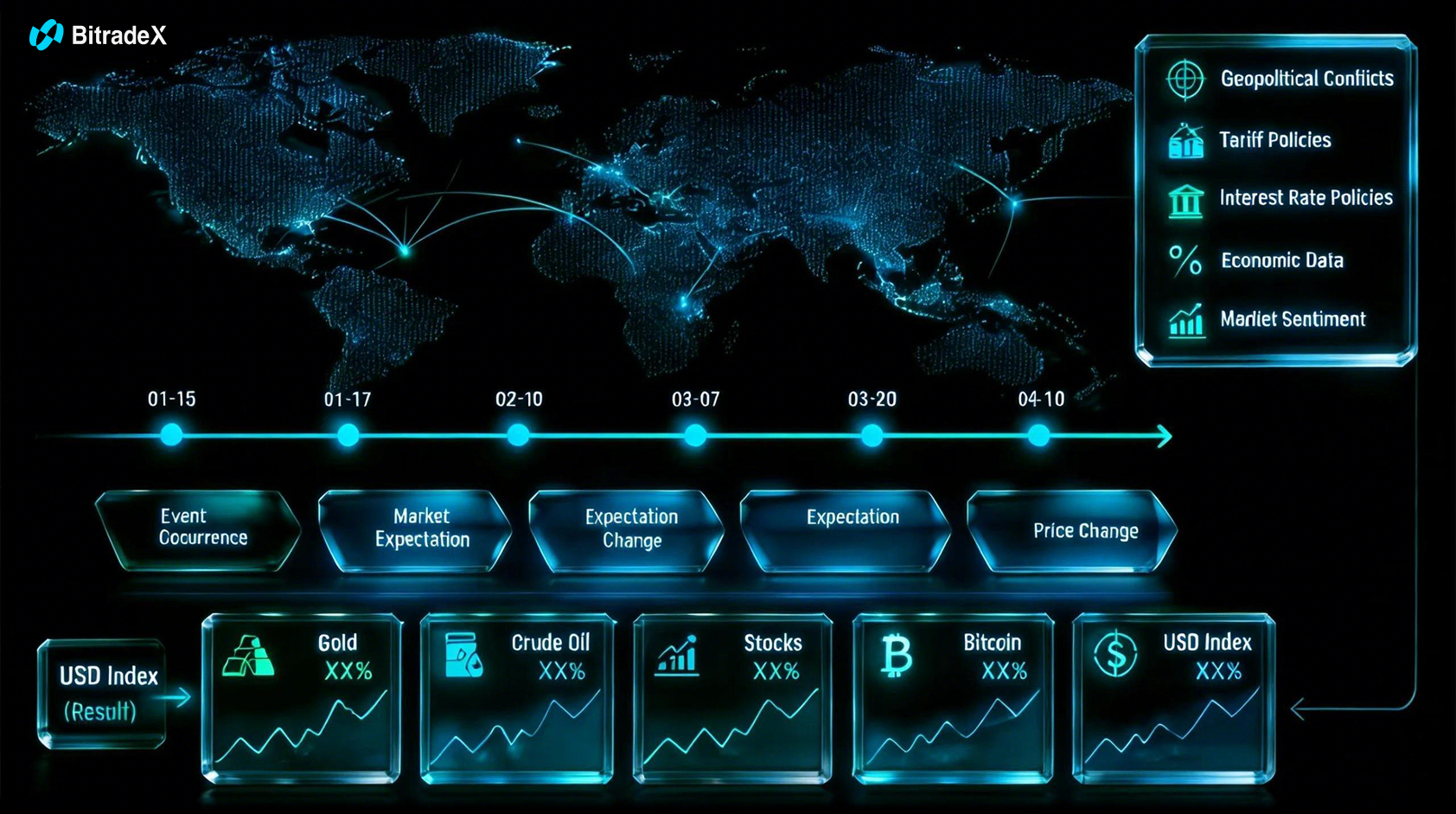
An increasing number of market movements are no longer driven by the assets themselves, but by events. Assets are merely the carriers of price, while events are the starting points of price changes.
The Limitations of Traditional Trading
While the market is increasingly driven by events, traditional trading methods have not changed much. If investors believe gold will rise, they need to trade gold; if they judge that crude oil will continue to strengthen, they need to enter the crude oil market; if they are bullish on Bitcoin, they must switch to digital asset trading.
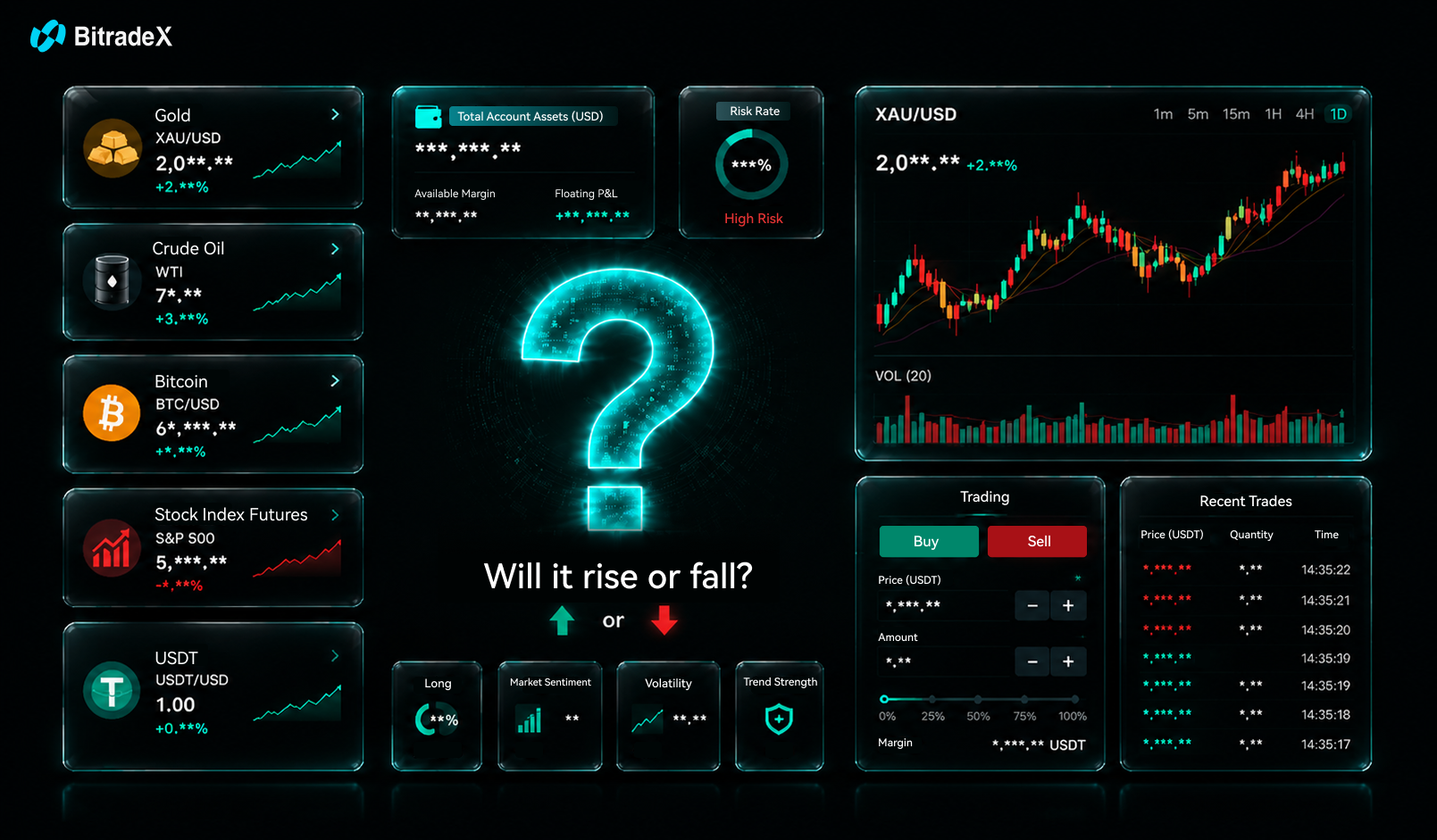
Different assets correspond to different trading rules, margin requirements, leverage settings, and trading hours. What investors truly want to express is just a simple market judgment, yet they often have to face a whole set of complex trading systems. Most of the time, what people really care about is not how to set leverage or manage positions, but just one question: Will the market go up or down next?
However, in traditional trading, such a simple judgment must be achieved indirectly by trading assets. Events are the starting point of market changes, yet trading remains stuck on the assets themselves.
A New Choice in the Event-Driven Era
It is against this market backdrop that BitradeX has launched Event Contracts. It does not change the way the market operates, but redefines how users participate in it. Unlike traditional contract trading, which requires studying K-line trends, setting leverage, and managing margins, Event Contracts bring the entire trading process back to the simplest step: judging the market direction. Users only need to choose Call (bullish) or Put (bearish) to participate in trading. There is no need to study complex parameters, no need to set leverage, and no risk of margin calls or liquidation. The focus of trading is no longer on how to operate, but on how to judge.
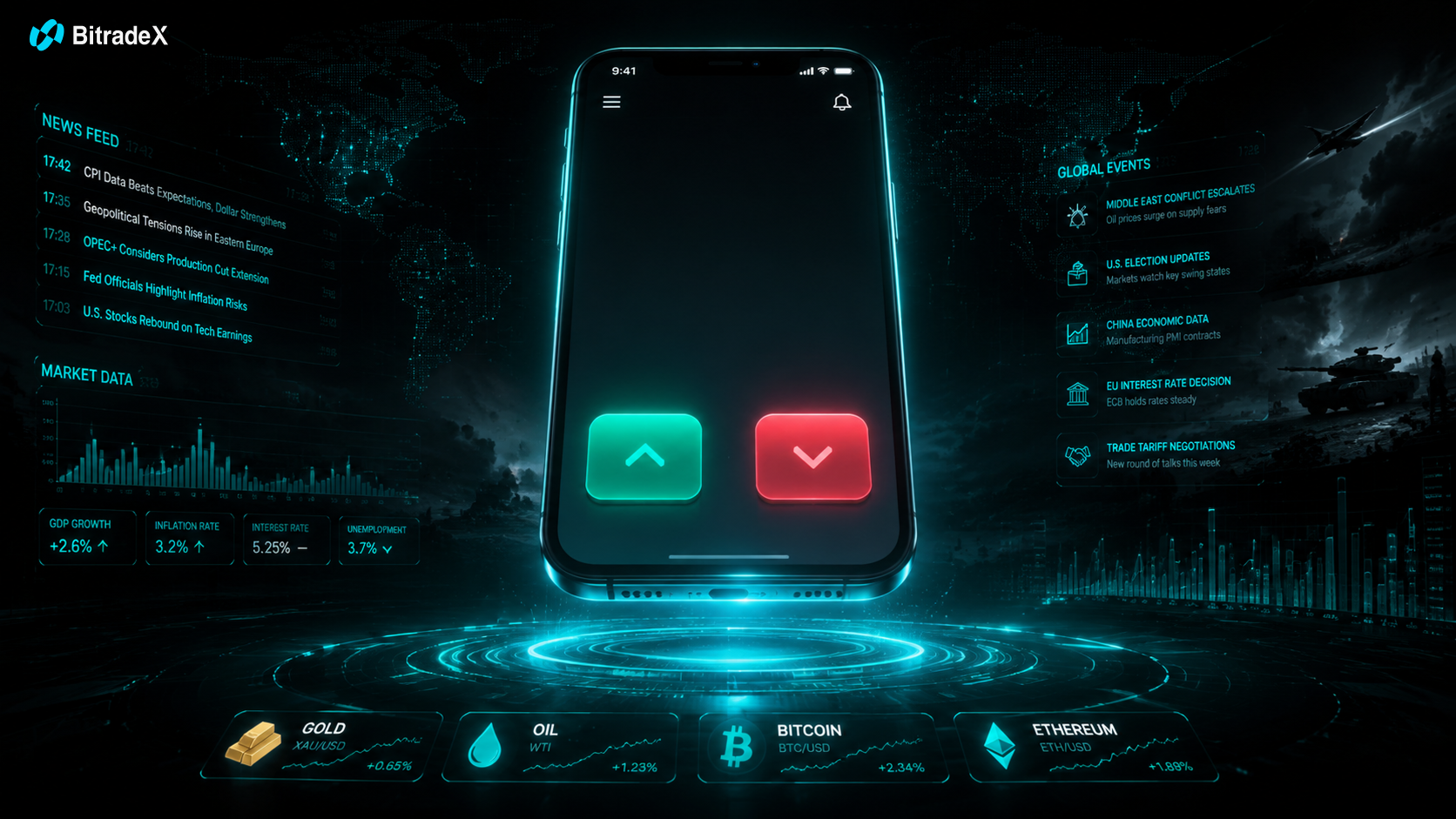
Currently, BitradeX Event Contracts support three trading periods: 5 minutes, 10 minutes, and 15 minutes. They also open up popular trading assets such as Gold, Crude Oil, BTC, and ETH, allowing investors to flexibly capture short-cycle market opportunities around global hot events.
In the past, people traded assets. Today, people are increasingly trading events. In the future, as global market integration continues to strengthen, every piece of major news, every economic data release, and every policy change could become a new trading starting point.
Markets will not stop fluctuating, and events will not stop happening. Event Contracts are not a replacement for traditional trading. Rather, they are a new way of trading that has naturally emerged in the event-driven era. As prices are increasingly determined by events, trading is returning to the simplest form of judgment.

所有评论